Introduction Carbonate hardness:
Our drinking water comes from the groundwater. This groundwater is constantly being added onto by rainwater. When the rain passes through the atmosphere, it enriches itself with carbon dioxide (CO2). Carbonic acid (H2CO3) is formed from the connection of H2O (water) and CO2 (carbon dioxide). Carbonic acid is the solvent of calcium. After the rain sinks into the soil, the carbonic acid extracts the calcium from calcium-rich stone. Through this process hydrogen carbonate [Ca(HCO3)2] is formed. This extraction process ends when the water is saturated with calcium. This means that the carbonic acid and the Calcium are in a carbonic acid – calcium equilibrium. Depending on the ground quality (amount of calcium and amount of carbonic acid) more or less calcium is extracted into the water.
A real-life example of an artificial template
If you have a saturated salt solution in a glass, no crystals will form. However, if you put a wool thread into the water, crystals
will start to form on it. The wool thread functions as an artifi cial template, reducing the enthalpy and encouraging the dissolved salt to form a crystal.
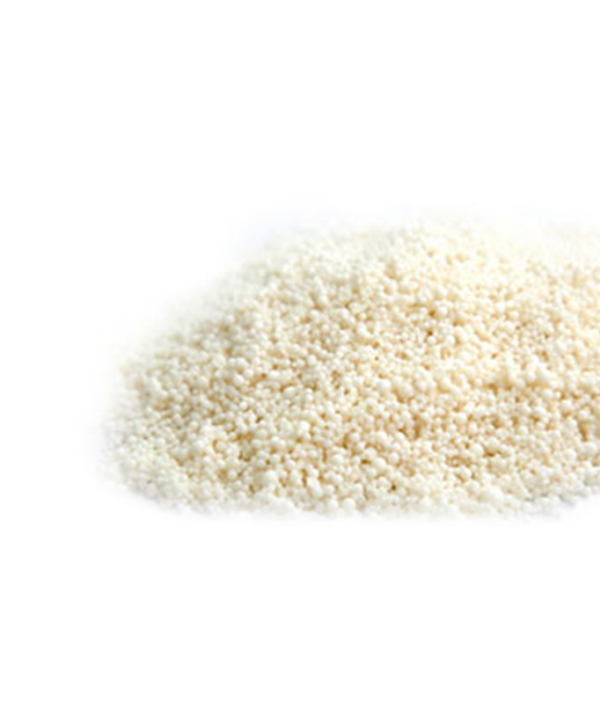
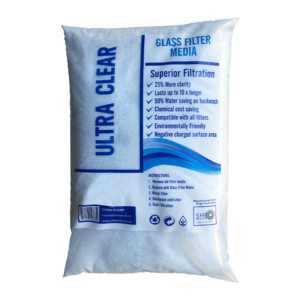
Descaling effect of the Evolet Anti-Scale media
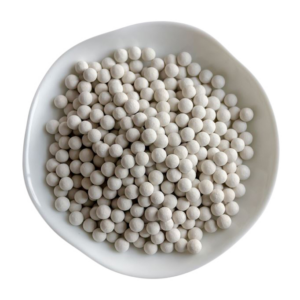
The Evolet Anti-Scale media also has a descaling effect on scale already present in old pipes, hardware, etc. The water coming from the media is saturated with free CO2 .Carbonate hardness in already existing scale are removed by this CO2 saturated water and slowly floating in the water. This way existing scale is usually heavily reduced or removed within 1 to 2 months.


Reviews
There are no reviews yet.